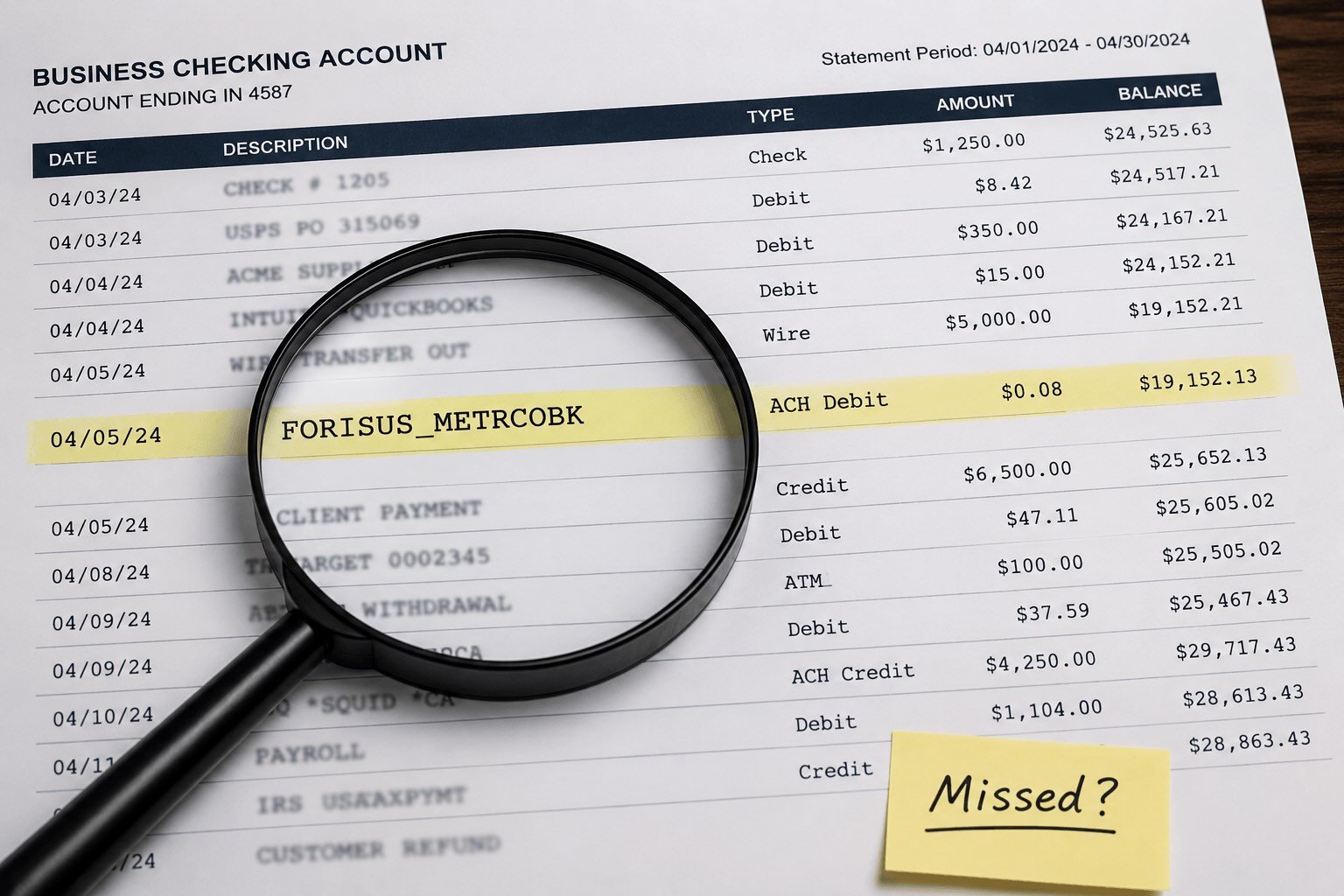
How traditional financial records can reveal previously unknown exchange accounts and digital asset activity.
Cryptocurrency asset investigations do not always begin with a wallet address or transaction hash. In civil litigation, judgment enforcement, and matrimonial matters, the first evidence of cryptocurrency ownership may instead appear in an ordinary bank statement.
This article examines how bank records can reveal previously unknown cryptocurrency activity, including exchange relationships that may not be obvious from the transaction descriptions alone. It is the first step in a broader investigative process: identifying where cryptocurrency assets may be held before blockchain tracing can begin.
Bank Records: The Most Common Starting Point
Cryptocurrency investigations are often portrayed as ‘blockchain tracing’ exercises. Blockchain tracing typically begins with a wallet address or transaction hash. Even if there is only a single thread to pull on – a small piece of blockchain data tied to a specific subject – forensic analysts may be able to trace an entire tapestry of undisclosed assets.
But many civil investigations do not begin with that thread.
Before blockchain tracing can begin, investigators often must first identify the cryptocurrency exchange, payment processor, or other financial relationship that connects a subject to digital assets.
For that reason, they may begin with traditional financial records and third-party discovery. Bank records obtained through civil process are frequently the most productive starting point. A review of bank statements may immediately reveal relationships with well-known cryptocurrency exchanges such as Coinbase, Kraken, or Gemini through ACH transfers between the customer's bank account and the exchange.
Knowing where to look – and what to look for – can substantially improve the likelihood of identifying previously unknown exchange accounts and digital asset holdings.
Unfortunately, not every indicator is so obvious. Cryptocurrency-related transactions are frequently overlooked, misinterpreted, or disregarded during an initial review of banking records when the reviewer is unfamiliar with common transaction patterns.
Why Crypto-Related Transactions Are Frequently Missed
One reason relevant records are overlooked involves inconsistent naming conventions. The following real-world examples illustrate how certain cryptocurrency-related transactions may be hiding in plain sight.
Bank records may reflect the exchange's banking partners or banking intermediaries rather than the exchange itself.
Transfers to a Crypto.com customer account might appear on a checking account statement as a transfer to the exchange’s past banking partner, Metropolitan Commercial Bank, without any direct reference to Crypto.com.
The name of the partner bank may be truncated or abbreviated in ways that appear inconsistent or potentially confusing.
Transfers might appear on a checking account as a transfer to “MCB” or “Metropolitan CK” rather than the full name of the financial institution, Metropolitan Commercial Bank.
Bank records may reflect the exchange's parent company or an affiliated entity, which often have little name recognition outside the cryptocurrency industry.
Transfers may instead reference affiliated entities such as Foris DAX or Foris Inc., or combine affiliate and banking partner names into a composite such as FORISUS_METRCOBK.
Not every cryptocurrency purchase involves a direct relationship with an exchange. Bank records may instead identify payment processors, Bitcoin ATM operators, OTC trading desks, or other intermediaries that facilitate digital asset purchases. A bank statement containing repeated debits to MoonPay or Banxa, for example, might not initially appear related to cryptocurrency activity, yet those transactions may provide the first indication that the accountholder has acquired digital assets.
Small Transactions Can Have Outsized Investigative Value
Relevant records can also be disregarded when small transactions possess significantly greater intelligence value than their dollar value would suggest.
Transactions involving only a few pennies – often a series of deposits and withdrawals with a net value of zero – may appear insignificant at first glance but can represent microdeposits used for account verification by a cryptocurrency exchange or one of its third-party service providers.
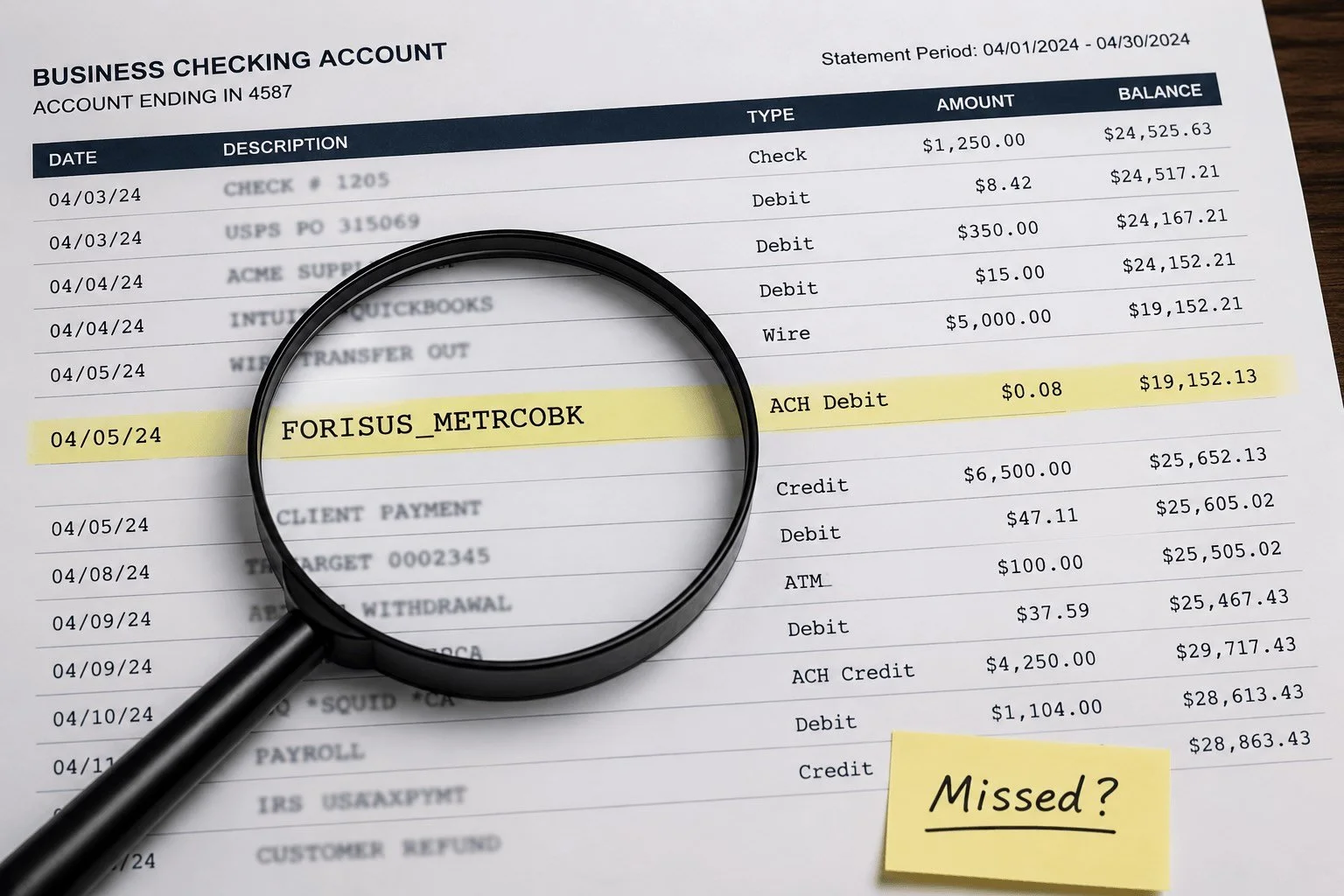
Even if no large-dollar transfers appear in the available banking records, the corresponding exchange account may nevertheless hold substantial cryptocurrency assets.
The indicators most likely to reveal cryptocurrency ownership are not always the largest transactions or the most obvious counterparties. More often, they are subtle clues that become meaningful only when viewed through the lens of a cryptocurrency investigation. Those clues can often be uncovered through a careful review of ACH descriptions, debit card descriptors, wire references, microdeposit activity, and recurring verification transactions.
Seemingly insignificant transaction details may provide the first indication that cryptocurrency assets exist. Identifying and correctly interpreting those indicators can determine whether an investigation ends with a dead end – or with the discovery of a previously unknown exchange account.
This is the first article in our series, How to Find Cryptocurrency Assets: A Discovery Guide for Attorneys. If a review of available banking records shows no evidence of exchange accounts, but cryptocurrency assets are still suspected to exist, the second article addresses where discovery should be directed next: Locating Crypto Exchange Accounts. After exchanges have been successfully identified and subpoenaed, the third article explains how to interpret the records received: Making Sense of Cryptocurrency Exchange Records.

John Powers, CFE, CTCE, is President of Hudson Intelligence. He specializes in cryptocurrency forensic investigations, asset tracing, and expert consulting for attorneys handling judgment enforcement, matrimonial disputes, commercial litigation, fraud, and other matters involving digital assets.
Questions About a Cryptocurrency Matter?
Whether you are attempting to identify undisclosed cryptocurrency holdings, interpret exchange records, or determine the next step in a cryptocurrency asset investigation, we would be glad to discuss your matter and how we might assist.